
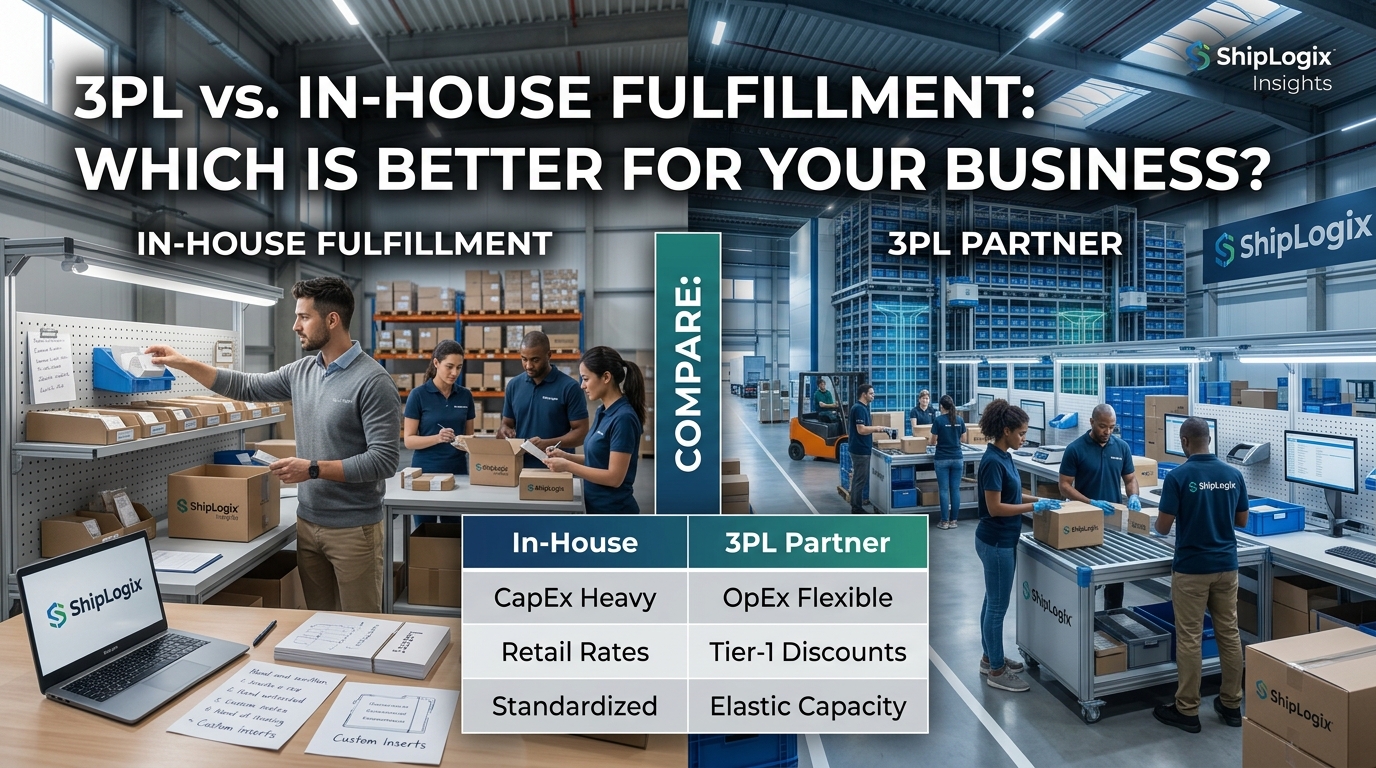
3PL vs. In-House Fulfillment: The Executive Decision Framework for Scaling E-Commerce
Choosing between third-party logistics (3PL) and self-managed in-house fulfillment is one of the most consequential operational decisions an e-commerce brand can make. This decision directly shapes customer satisfaction, unit economics, working capital flexibility, and the long-term scalability of your supply chain.
Neither model is universally superior. The ideal fulfillment strategy depends entirely on order volume, SKU complexity,capital reserves, and the level of brand experience control required at unboxing.
Defining the Core Strategies
- In-House Fulfillment: Managing every phase of post-purchase logistics internally—from leasing warehouse space and hiring warehouse labor to purchasing software licenses, packing parcels, and managing carrier accounts.
- Third-Party Logistics (3PL): Outsourcing warehousing, pick-and-pack operations, inventory management, and shipping to a specialized logistics provider that leverages shared infrastructure and negotiated carrier rates.
Side-by-Side Operational Comparison
| Operational Area | In-House Fulfillment | Third-Party Logistics (3PL) |
|---|---|---|
| Capital Requirements | High upfront investment (leases, equipment, WMS setup) | Low upfront investment (pay-as-you-go variable cost model) |
| Scalability & Flex | Fixed footprint; costly and slow to scale during peak volume | Elastic storage and picking capacity that scales on demand |
| Cost Structure | High fixed costs; favorable unit economics at high scale | Variable costs; predictable per-order handling and storage fees |
| Brand Control | Total control over unboxing, custom inserts, and white-glove packaging | Standardized packing procedures; custom branding options depend on provider |
| Carrier Rates | Dependent on individual brand shipping volume | Tiered bulk rates negotiated across entire client network |
| Management Focus | High internal focus on labor management and warehouse operations | Core focus remains on product design, marketing, and revenue growth |
When In-House Fulfillment Makes Sense
Self-fulfillment remains an attractive choice for specific operating environments:
- Bespoke or Highly Customized Products: Brands requiring custom tissue wrapping, hand-written notes, complex product assembly, or fragile white-glove packaging.
- Low Volume or Early-Stage Operations: Startups processing under 300–500 orders per month where founding teams can manage packing without fixed overhead.
- Strict Quality and Environmental Controls: Temperature-sensitive items or high-value luxury goods needing immediate, hands-on quality oversight.
When Switching to a 3PL Is the Strategic Choice
Transitioning to a 3PL becomes advantageous when operational bottlenecks begin throttling top-line revenue:
- Sustained Order Growth: Exceeding 1,000+ orders per month where warehouse staffing and space become daily operational drag.
- Regional Delivery Demands: Customers expecting 2-day ground shipping without paying premium air freight rates.
- Capital Efficiency Focus: Brands preferring to deploy capital into customer acquisition and product development rather than long-term commercial leases.
Strategic Evaluation Checklist
Before committing to a fulfillment path, evaluate these four key criteria:
1. Unit Economics & Volume Calculate your total cost per order for in-house operations—including warehouse rent,labor wages, packaging materials, software subscriptions, and carrier fees—versus a 3PL quote.
2. Geographic Distribution Analyze customer shipping destinations. Operating out of a single internal facility often leads to higher shipping zone costs and longer transit times compared to a distributed 3PL network.
3. Peak Season Volatility Determine whether your team can handle Q4 volume spikes without over-hiring temporary labor or suffering fulfillment delays.
4. Leadership Focus Assess whether executive bandwidth is best spent managing warehouse personnel or expanding sales channels and product lines.
How ShipLogix Accelerates Fulfillment Efficiency
For brands scaling beyond in-house capacity, ShipLogix provides an enterprise-grade fulfillment platform combining distributed warehousing, real-time inventory visibility, and automated carrier routing. By plugging into ShipLogix, brands reduce shipping transit times, lower zone rates, and maintain complete operational oversight through a single unified dashboard—allowing teams to focus on growth while logistics operates on autopilot.
Ready to Optimize Your Supply Chain?
Contact ShipLogix today to request a custom fulfillment audit and discover how distributed 3PL logistics can reduce your cost per order while elevating the customer experience.team today] for a complete, line-by-line fulfillment cost comparison and discover how much margin you can reclaim.


Hi, this is a comment.
To get started with moderating, editing, and deleting comments, please visit the Comments screen in the dashboard.
Commenter avatars come from Gravatar.